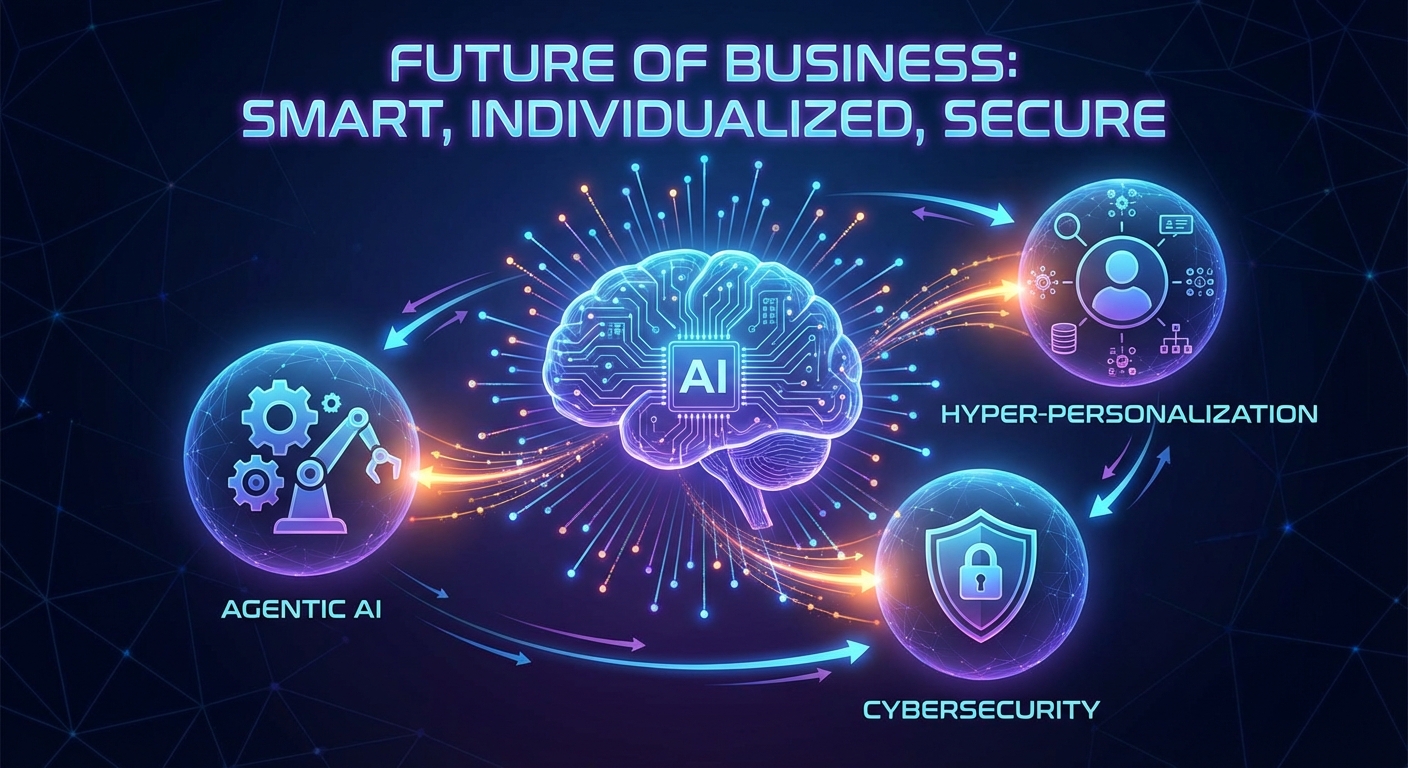
As we look ahead to the future of business technology, several transformative trends are poised to shape how companies engage with customers, deliver experiences, and protect their digital ecosystems. Among the most impactful are the rise of agentic AI, the evolution of hyper-personalized customer experiences, and a heightened focus on cybersecurity.
**Agentic AI is revolutionizing customer and client interactions**, introducing a new era of proactive, intelligent engagement. Unlike traditional AI models that rely on user prompts, agentic AI systems act autonomously based on context, goals, and real-time data. These systems can anticipate customer needs, resolve issues before they escalate, and personalize conversations in ways that mimic human intuition. Imagine a virtual agent that not only answers questions but also suggests solutions, books appointments, and follows up autonomously with tailored recommendations. The implications for industries such as retail, finance, and healthcare are immense, allowing organizations to scale exceptional service without sacrificing the human touch.
At the same time, **customization is undergoing its next evolution: hyper-personalization**. With enriched customer data and more sophisticated AI tools, brands can now create micro-targeted experiences that surpass traditional segmentation. Whether it’s a marketing email designed around a customer’s real-time browsing habits or a product interface that adapts to an individual’s preferences and behavior patterns, consumers will increasingly expect brands to “know them” on a deeper level. This kind of personalization boosts engagement, loyalty, and conversions—but it also introduces new complexities around data management and privacy.
This naturally leads to the third major trend: **cybersecurity as a business-critical strategy, not just a technical requirement**. As companies collect and rely on more personalized data, they also become more attractive targets for cyberattacks. The rise in sophisticated threats—like AI-powered phishing campaigns and deepfake scams—requires businesses to rethink their approach to security. It’s no longer sufficient to rely on firewalls and periodic audits; organizations must integrate security into every layer of their digital infrastructure, from AI training models to customer-facing applications. Moreover, building customer trust will rely heavily on a company’s ability to transparently handle and secure personal data.
These three trends are deeply interconnected. Agentic AI relies on data to be effective—but that data must be accurate, responsibly collected, and well-protected. Hyper-personalization enhances customer satisfaction—but if it’s done without addressing privacy concerns, it could erode trust instead of building it. And cybersecurity isn’t just about defending assets; it’s about enabling innovation in ways that are sustainable and ethical.
As we move into this new phase of digital transformation, forward-thinking businesses will need to strike a thoughtful balance between automation, personalization, and security. Embracing these trends isn’t just about staying competitive—it’s about redefining what it means to deliver value in the age of intelligent technology.